
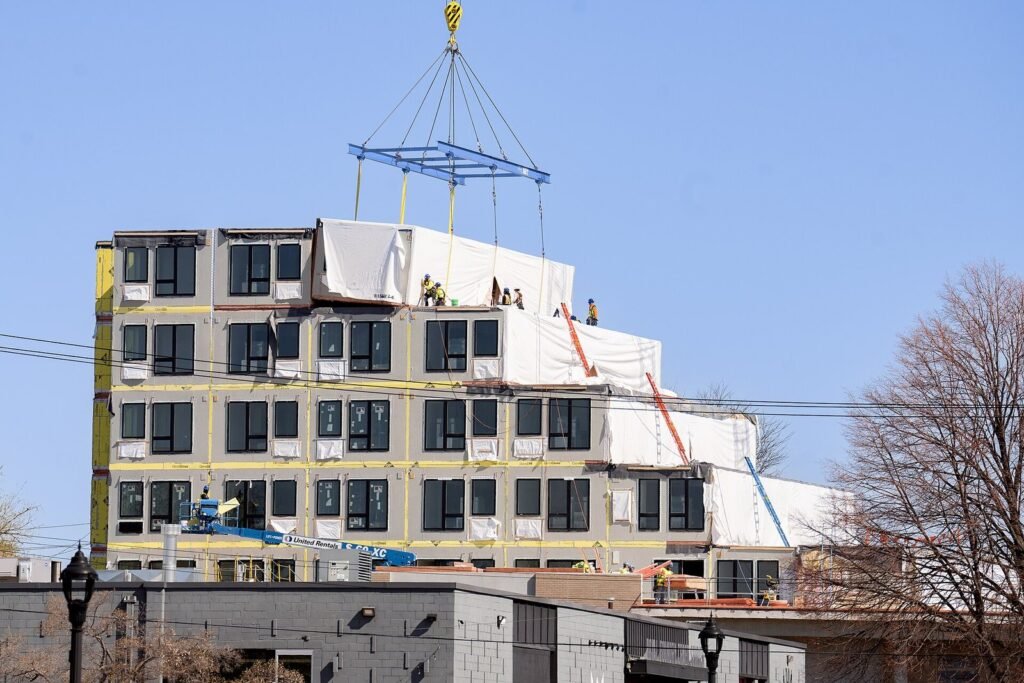
A module that left the plant on time can still miss its set date. It may wait at a state line for an escort, sit in a staging yard because the crane pad was not ready, or travel an extra hundred miles because a bridge on the planned route could not take the load. In modular construction, transport and lifting are where factory precision meets public roads, weather, and site conditions, and they deserve as much planning as the design.
Start with the route
Oversize loads need permits from each state or provincial authority whose roads they use, and sometimes from local jurisdictions as well. Permit conditions commonly control dimensions, weight, travel hours, days of the week, escort vehicles, and specified routes. These rules vary widely between jurisdictions and change over time, so confirm current requirements with the permit offices or an experienced carrier for every project rather than relying on the last job.
A route survey should happen before module dimensions are final. Look for low bridges and overhead signs, utility lines, tight turns, roundabouts, weight-restricted bridges, construction zones, and the last mile into the site. Module width and height are design decisions with transport consequences, and the design team should know the route limits before freezing the plans.
Coordinate the convoy
Treat delivery as part of the production sequence, because in offsite construction the plant and the site run on one schedule. Modules should leave the plant in set order, with marking that matches the setting plan, so the crane never waits for a box parked behind another one. Build in time for escort availability and permitted travel windows. Decide in advance whether modules will be staged at a nearby yard, which gives flexibility, or delivered straight to the hook, which saves handling but leaves no margin.
Protection matters on the road. Weather wrap, temporary bracing, and secure fastening of interior items protect finished work from vibration and rain. Inspect each module on arrival and record any damage before it is lifted, while responsibility is still clear.
Plan the lift
Crane planning starts with the heaviest pick at the farthest radius, not the average module. A qualified lift planner should confirm crane capacity, boom length, and configuration, and should review ground conditions under the outriggers and along the truck path. Soft ground, buried utilities, and backfilled trenches are common problems.
Rigging must match the lifting points engineered into the module. Spreader bars or lifting frames keep slings from crushing the structure, and the fabricator should provide lifting point locations, module weights, and centers of gravity. The crew should never improvise attachment points.
Site readiness is the most frequent cause of delay on set day. Before the first truck rolls, confirm that the foundation is complete, surveyed, and within the agreed tolerance, that anchor locations are verified, that the crane pad and access road are ready, and that overhead lines have been dealt with.
A pre-set checklist
- Route survey completed and permits issued for every jurisdiction.
- Module weights, dimensions, and lifting points confirmed by the fabricator.
- Lift plan reviewed, crane booked, and ground bearing verified.
- Foundation surveyed and accepted against tolerance.
- Delivery sequence matched to the setting plan.
- Weather limits for travel and lifting agreed in writing.
- Damage inspection process and contacts set for arrival.
Who owns the risk
Contracts should state who arranges and pays for permits, escorts, and cranes, and when responsibility for the module passes from fabricator to carrier to contractor. Insurance should follow the same handoffs. Ambiguity here becomes a dispute the first time a module arrives damaged or a lift is canceled for wind.
#ModularConstruction #OffsiteConstruction #OversizeLoads #RouteSurvey #CranePlanning #LiftPlan
Image: Chad Davis, CC BY 2.0, via Wikimedia Commons