
In offsite construction, every defect found on site costs more than the same defect found in the plant. On site it means a crew waiting, a crane on the clock, a trip back for parts, or a wall opened after finishes are done. In the plant, the same problem is a short delay at a station with the right tools close by. A zero-defect goal does not mean nothing ever goes wrong. It means the factory is built to catch problems at the earliest point and stop them from moving downstream.
Quality assurance and quality control
The two terms are often used interchangeably, but they do different jobs. Quality assurance is the system: procedures, training, approved drawings, and the rules for how work is done and documented. Quality control is the checking: the inspections and measurements that confirm a specific component meets the standard. A plant needs both. Inspection without a system finds the same defects over and over. A system without inspection has no evidence that it works.
ICC/MBI 1200 addresses manufacturing quality control as part of the fabrication process, and third-party plant agencies typically review a manufacturer’s quality program as part of plant approval.
Build checks into the line
The most effective checks happen at the station where the work is done, before the component moves. Each station should have a short checklist covering the items most likely to go wrong there, such as stud spacing, opening locations, fastener schedules, squareness, and penetrations. The worker who did the task completes it, and a lead or inspector verifies selected items.
Hold points are the critical checks that must pass before work is closed up. The inspection before a wall is sheathed, or before a ceiling is drywalled, is the last chance to see what is inside. Treat these as gates the line cannot pass without a signature.
Measure dimensions against the tolerances the site needs, not just the drawing. In modular construction, a module can match its drawing and still fail to fit a foundation built to a different tolerance. Agree tolerances with the site team and check them at the end of the line.
Close the loop
Finding a defect is half the job. Every nonconformance should be recorded with a location, cause, and correction, and the records should be reviewed regularly for patterns. When the same issue repeats, the fix belongs upstream, in a drawing, a jig, a material, or training, rather than at the inspection station.
The loop must extend past the plant gate. Site crews and service teams see defects the plant never sees, such as shipping damage, connection problems, and items missed at final. Give the field a simple way to report issues with photos and component IDs, and route those reports to the station responsible.
A basic loop
- Define standards and tolerances at each station.
- Check at the station and at hold points.
- Record every nonconformance in one system.
- Review trends on a fixed schedule.
- Correct the root cause and update the procedure.
- Feed site and warranty findings back to the plant.
Culture decides whether it works
Workers must be able to stop a component without penalty when something is wrong. If production pressure always wins, defects get passed along quietly and the data becomes useless. Leadership sets that tone by treating a reported problem as useful information rather than a personal failure.
Track a small number of metrics that matter, such as first-pass yield at hold points, defects found on site per unit, and time to close a corrective action. Post them on the floor so every crew can see whether the loop is working.
#OffsiteConstruction #ModularConstruction #QualityAssurance #QualityControl #ZeroDefect #FirstPassYield
Standard referenced: ICC/MBI 1200, Standard for Off-Site Construction: Planning, Design, Fabrication and Assembly.
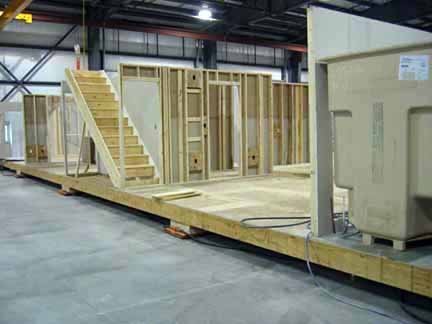
Image: Riverview Homes, Inc., CC BY-SA 3.0, via Wikimedia Commons