
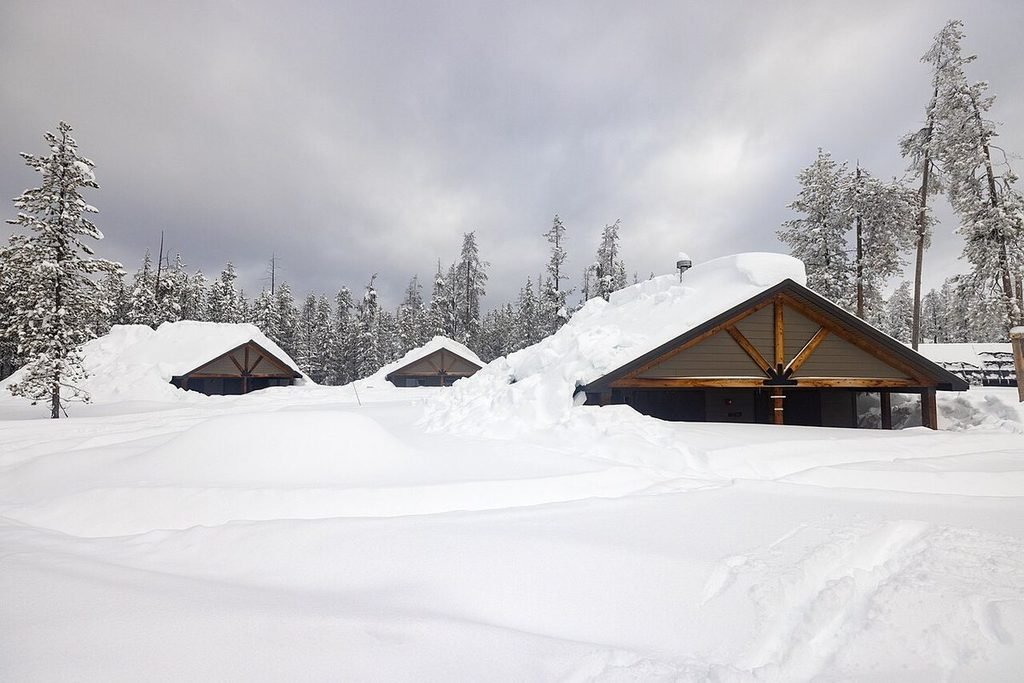
One of the strongest arguments for modular construction is that the work happens indoors. Framing, insulation, drywall, and finishes go in under a roof, away from rain and snow. That advantage only holds if the building stays dry after it leaves the plant. A module that gets soaked in the yard, on the road, or during set can lose much of what the factory protected, and the damage often stays hidden until after move-in.
Where water gets in
In offsite construction the risk moves around. In the plant, the main exposures are yard storage and the time between a module coming off the line and getting wrapped. On the road, wind at highway speed tears loose coverings and drives rain into open ends. On site, the exposure is greatest of all. Modules sit open at the mate lines, roofs may not be finished, and a single storm during a multi-day set can put water straight into ceilings and wall cavities. Every one of these points needs a plan, not just the factory.
Treat the wrap as part of the product
Too many teams treat weatherproofing in transit as an afterthought handled by whoever loads the truck. It works better as a specified part of the product. The manufacturer should define what gets wrapped, with what material, how it is fastened, and who inspects it before the module leaves. Open ends and mate line faces need rigid or reinforced protection, not just loose plastic. Roof surfaces need coverings that shed water instead of pooling it. A wrap that is breathable on the outside but sealed tight against rain helps prevent trapped condensation, which can cause its own problems over a long trip or a wet week in storage.
Plan the set around the weather
Set day is when good moisture control most often breaks down. Crews are focused on cranes, rigging, and alignment, and protection comes off faster than it goes back on. A few habits help. Remove coverings only from the modules being set that day. Have temporary roofing and mate line seals ready on site before the first lift. Watch forecasts closely and be willing to stop setting when heavy rain is coming, even if it costs a crane day. A delayed set costs far less than a wet building. Assign one person on each shift to own weather protection so it does not fall between the manufacturer and the general contractor.
Close the building envelope fast
The longer modules sit without a finished roof and sealed joints, the more chances water has to get in. Sequence the work so the building envelope closes as soon as possible after the last module is set. That means roofing crews, mate line sealing, and window and door flashing details are scheduled to follow the set closely, not weeks later. Prefabrication shortens the schedule, and this is the step where that time savings either holds or slips away.
Check before you close it up
Even with good protection, some water may get in. Before interior finishes are closed at the mate lines, check moisture levels in framing and sheathing with a meter, especially at ceilings, corners, and the lowest points of each module. Record readings, dry out anything above the agreed limit, and replace damaged materials rather than covering them. Wet framing that gets sealed in can lead to mold, odors, and warranty claims that cost far more than a few days of drying.
Closing thoughts
Keeping modules dry is not complicated, but it requires someone to own it at every step. Make moisture protection part of the specification, the transport plan, and the set plan, and the quality built in the factory will still be there when the owner moves in.
#ModularConstruction #OffsiteConstruction #MoistureControl #Weatherproofing #BuildingEnvelope #Prefabrication